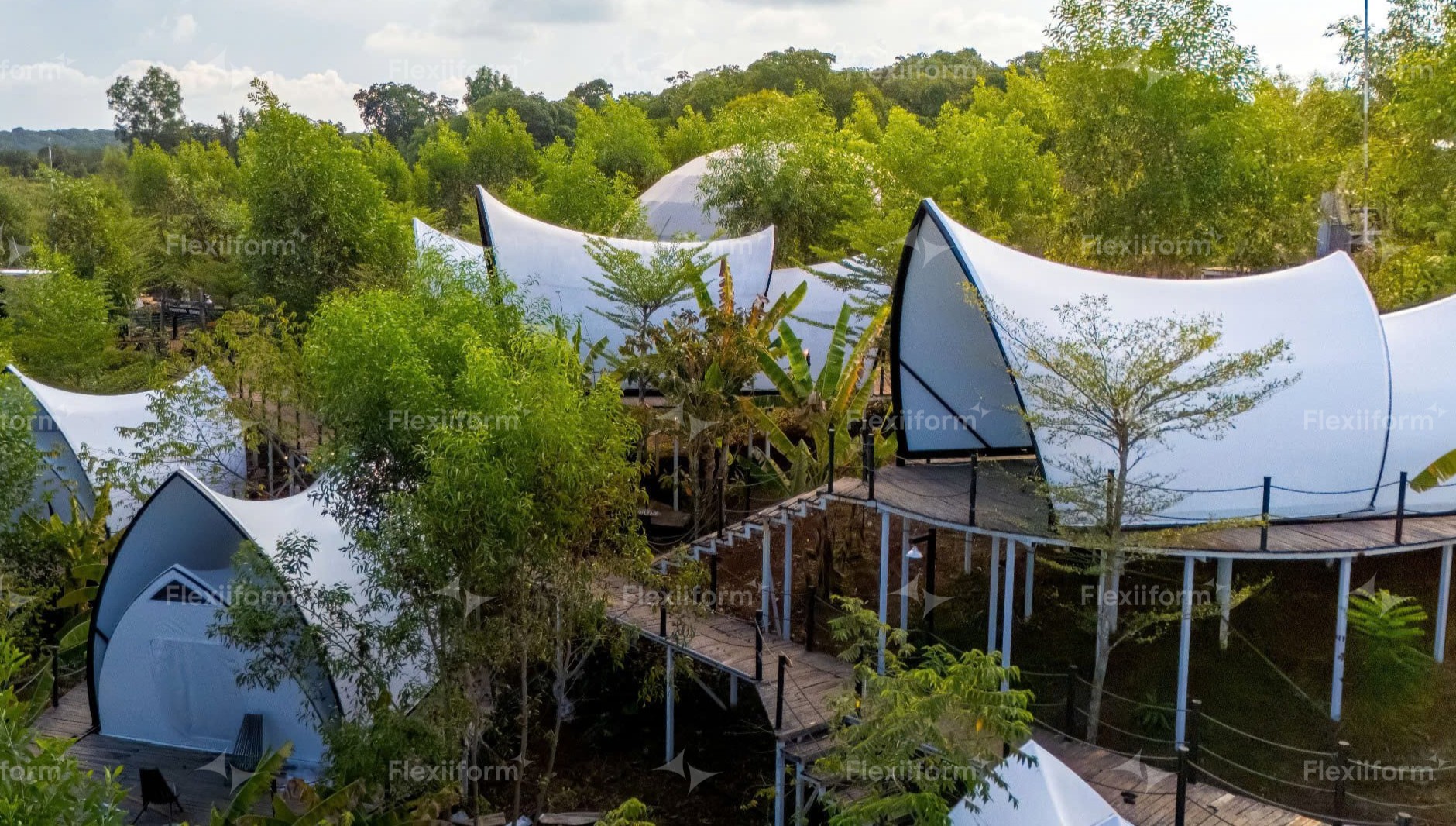
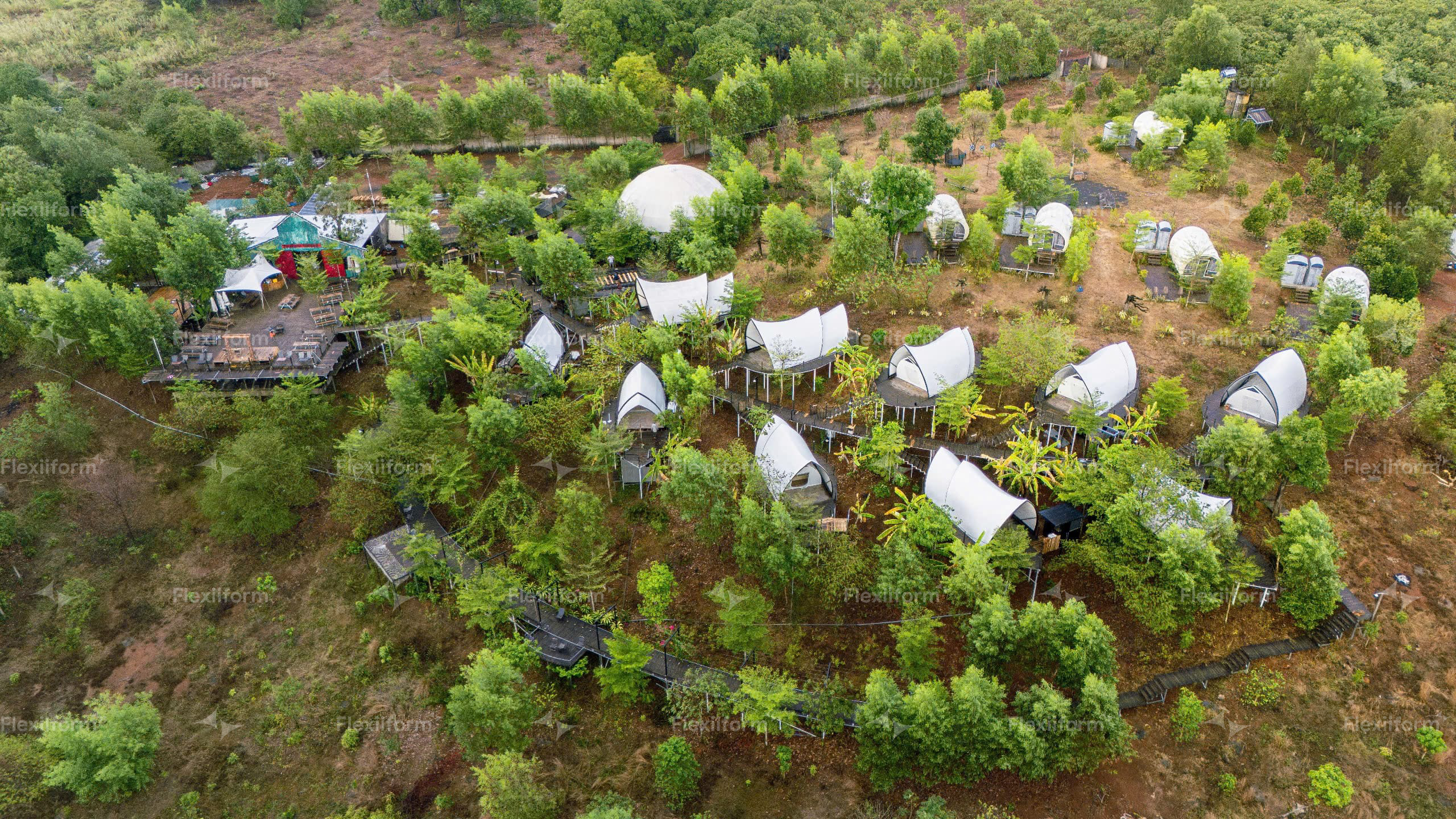
A double layer tent (also called a double wall or double skin tent) has an outer fabric layer stretched above an inner one, with an air gap between them. The outer layer takes the sun, the ventilated gap carries that heat away, and the inner layer and the room below stay much cooler than in a single layer tent at midday, so the air conditioning works less. For glamping tents in hot places such as Vietnam’s coast and southern lowlands, this is the biggest difference between a comfortable tent and a stuffy one. The Arch A Double-Layer Tent by Wild Duck Glamping Tent is built on this principle.
This article explains why single layer tents get hot, how a double layer keeps a tent cool, how single and double layer tents compare, how the Arch A Double-Layer Tent is built, and what else keeps a glamping tent cool.
Double layer glamping tents at a glance
- Construction outer fabric layer, ventilated air gap, inner fabric layer
- Why it is cooler the outer layer shades the inner one, and the air gap carries heat away before it reaches the room
- Benefits less midday heat, lighter air-conditioning load, steadier indoor temperature
- Trade-offs heavier, slower to install and more expensive than a single layer tent
- Best for coastal sites, hot lowlands, year-round air conditioning, long-term installations
- Wild Duck model Arch A Double-Layer Tent, 5 x 8 m floor, 4 x 5 m room, 2.6 to 3 m ceiling, 4.5 m roof peak
Camping double wall tents vs double layer glamping tents
Most results for “double wall tent” are camping tents: a light inner tent with mesh panels and a separate waterproof rain fly over it. The fly mainly keeps rain out and reduces condensation inside, and the tent is packed away after a few nights.
A double layer glamping tent uses the same idea at building scale: two layers of technical fabric tensioned over a fixed frame, an air gap designed for ventilation, and a tent that serves as a guest room for years. The main goal is keeping out heat and easing the load on the air conditioning.
Why do single layer tents get hot at midday?
In a single layer tent, the sun hits the only sheet of fabric directly. The fabric absorbs part of that energy and heats up, then passes the heat into the room in two ways: the air under the roof warms up, and the hot fabric surface radiates heat onto the people below, much like standing under a metal roof at noon. The darker the fabric and the stronger the sun, the faster the room heats up.
Air conditioning can still cool a single layer tent, but it has to run constantly to offset the heat coming through the roof. In a mild climate or under trees that heat is small and a single layer tent is comfortable. Under strong sun all year, it adds up on the power bill every day.
How does a double layer tent keep cool?
The second layer and the air gap do three things:
- Shade the inner layer: sunlight hits the outer layer first. The inner layer sits in its shade and is never in direct sun.
- Carry heat away through the gap: air in the gap, warmed by the outer layer, becomes lighter and rises, escaping at the openings and drawing cooler air in from below. This convection carries most of the heat away before it reaches the inner layer.
- Keep the ceiling from radiating heat: because the inner layer stays cooler, the ceiling no longer radiates heat down onto guests. People feel more comfortable even when the air temperature differs only a little.
The air gap has to be ventilated. A sealed gap with no way out simply traps heat, like a car parked in the sun with the windows closed. That is why a double layer glamping tent needs designed air inlets and outlets; it is not just a second sheet thrown over the top.
Beyond heat, the outer layer also takes the direct rain and UV, so the inner layer is less exposed to the weather.
Single layer vs double layer tent
| Feature | Single layer tent | Double layer tent |
|---|---|---|
| Construction | One fabric layer serving as roof and walls | Outer layer, ventilated air gap, inner layer |
| Midday indoor heat | Heats up quickly in strong sun | Cooler and steadier |
| Air conditioning | Runs harder to offset heat through the roof | Lighter load, lower power use |
| Weight and transport | Light and compact | Heavier, larger shipment |
| Installation time | Fast | Longer |
| Investment | Lower | Higher, offset by lower running costs |
| Best for | Mild climates, shaded sites, fast projects | Hot regions, coastal sites, year-round air conditioning |
A simple rule: if the site gets strong sun and the tents run air conditioning most of the year, the power saved over several years usually justifies the second layer. If the site is in cool highlands, a single layer tent is enough; see what is an arch glamping tent for the Arch A Single Layer Tent.
Arch A Double-Layer Tent: construction and specifications
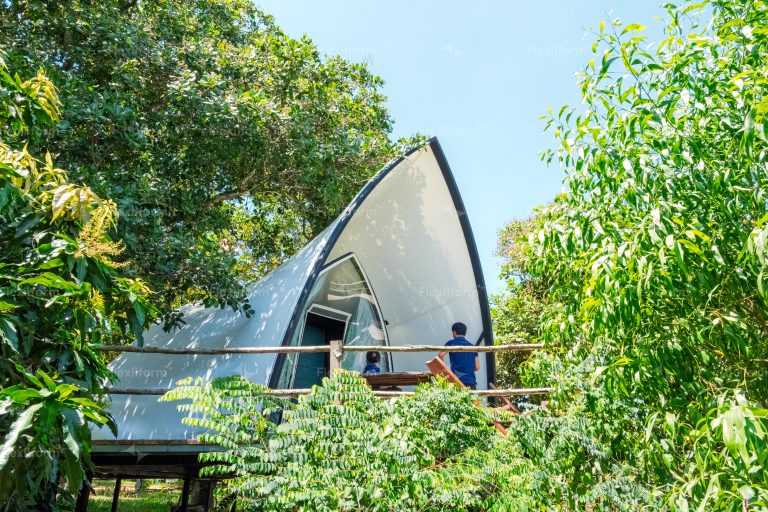
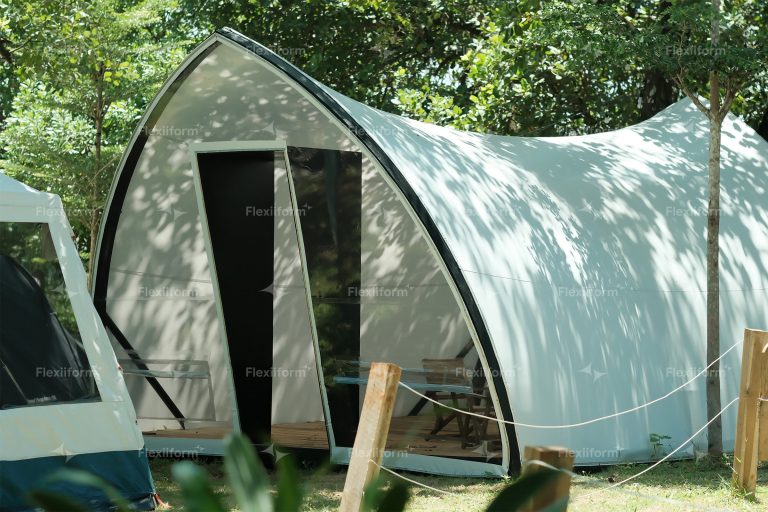
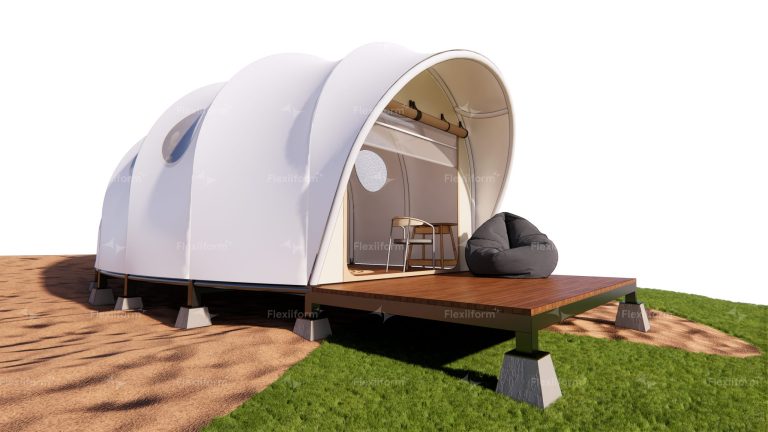
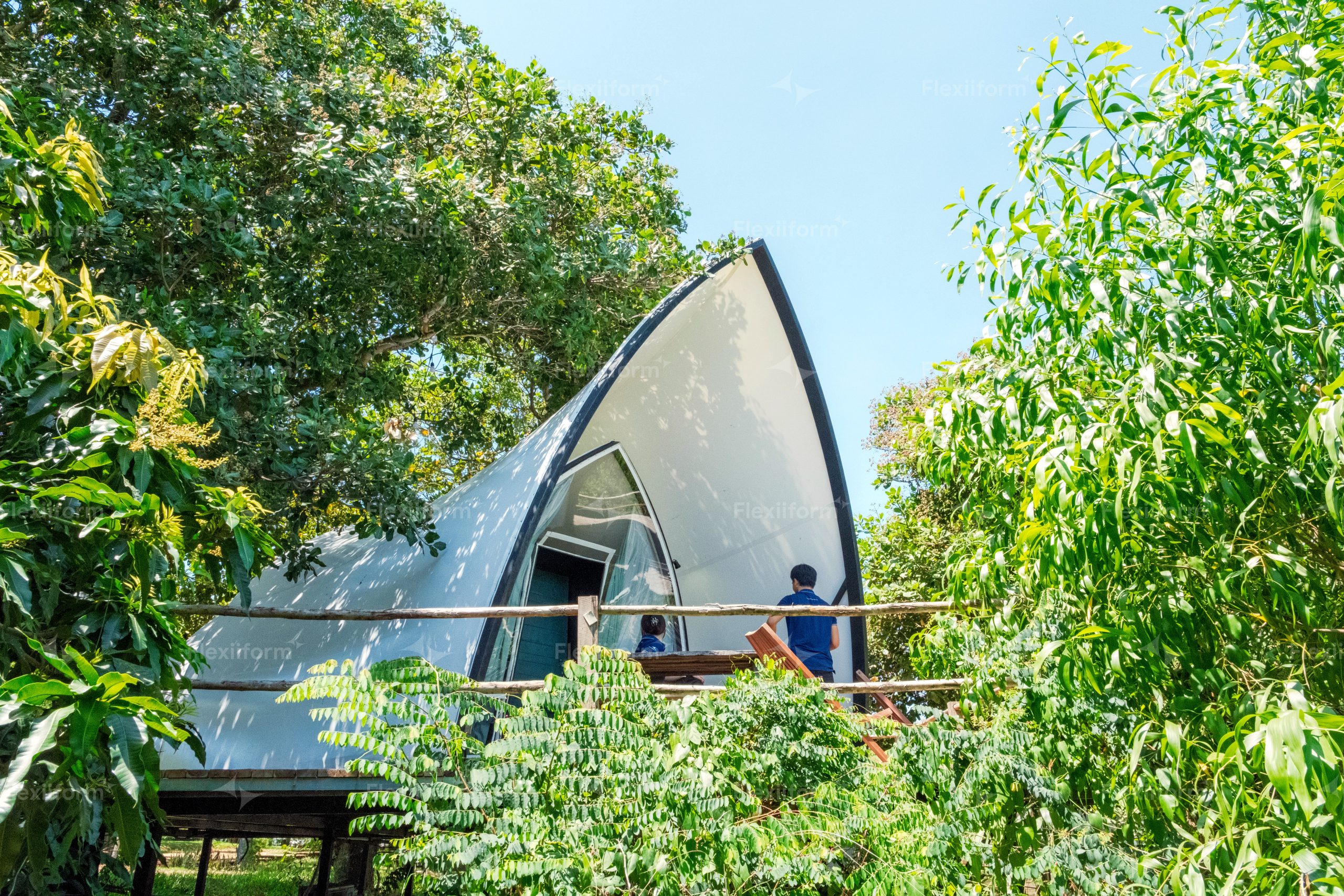
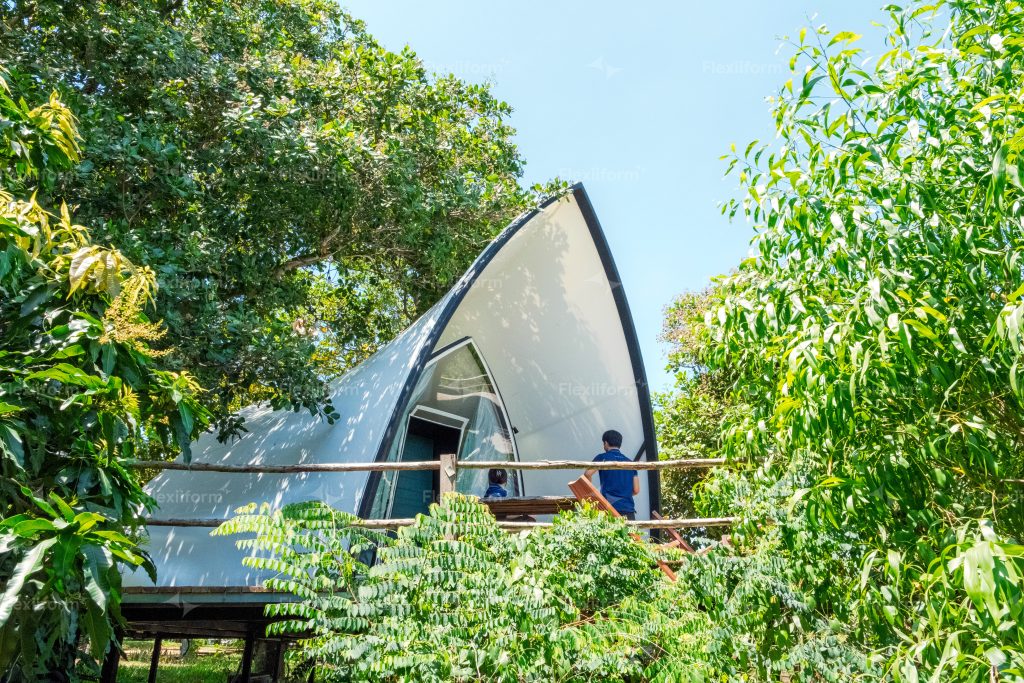
The Arch A Double-Layer Tent shares the arch architecture of the single layer version, but is larger and adds an outer membrane. From the front you can see the inner tent’s arch set back behind the outer membrane’s arch, with the air gap between them. The outer membrane sweeps over the room like a large curved sail, giving the tent a full, distinctive shape.
| Specification | Value |
|---|---|
| Floor size | 5 x 8 m |
| Room size | 4 x 5 m |
| Ceiling height | 2.6 to 3 m |
| Roof peak height | 4.5 m |
| Roof and walls | Opaque white PVC, blackout; front can be swapped for clear, light-transmitting fabric |
| Doors | One 1 x 2.2 m zip door, up to two on request; windows to order; insect mesh |
| Foundation | No foundation digging; base, transport and lifting equipment not included in the tent price |
| Service life | 5 to 10 years |
The 5 x 8 m floor is larger than the 4 x 5 m room, leaving deck space outside the room for a porch, seating or a path around the tent. A 2.6 to 3 m ceiling feels as open as a hotel room, with space for a large double bed, a sofa and a desk. Installation takes 3 workers and longer than the single layer version because of the outer membrane; Wild Duck confirms the timing for each project’s site.
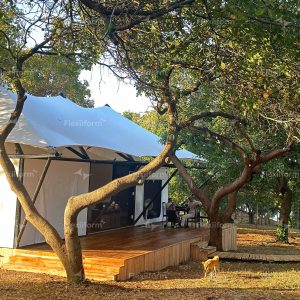
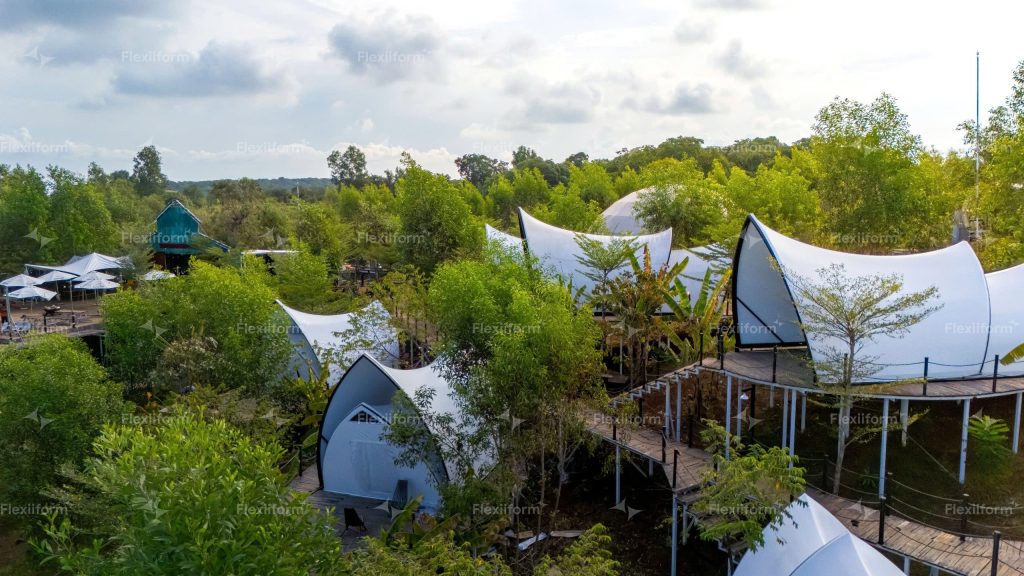
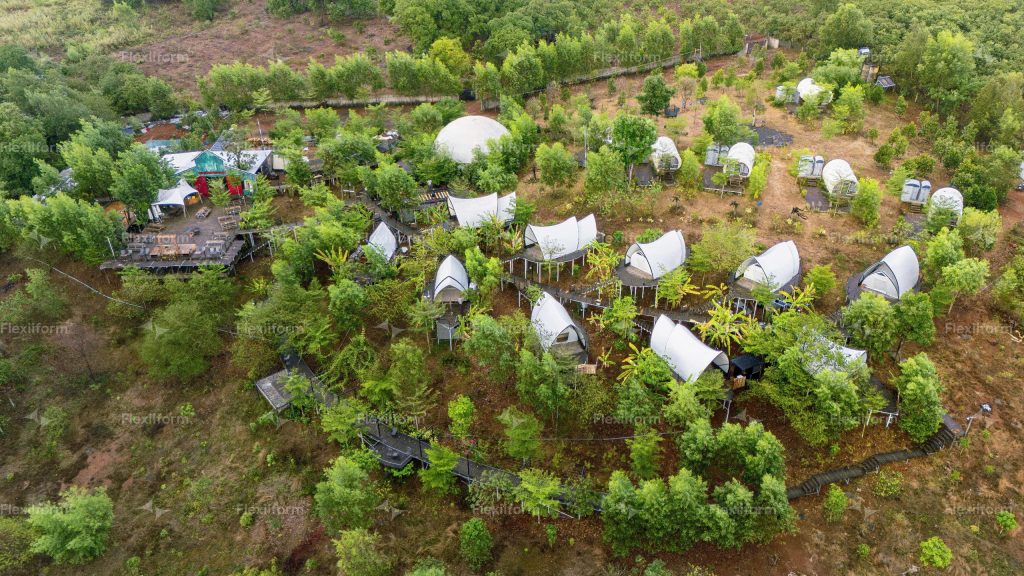
Of all Wild Duck tents, the Arch A Double-Layer has the strongest insulation. In the photos in this article, the tents stand on raised timber decks among trees, linked by boardwalks: air moves freely under the floor and guests look out over the treetops.
Which sites suit a double layer tent?
- Beach resorts: strong sun plus reflection from sand and water heats a single layer tent very quickly.
- Hot lowland sites: places like the Mekong Delta and southeast Vietnam are hot almost all year and often lack large shade trees.
- Year-round air conditioning: power savings add up over many years of operation.
- Premium rooms: guests paying higher rates expect a cool, quiet room like a hotel.
- Long-term or long-season installations: the longer setup time stops being a drawback.
7 ways to keep a glamping tent cool
Two layers are the foundation, but site layout also decides whether a tent runs hot or cool:
- Avoid the western afternoon sun: face the front and large doors east or towards shade; afternoon sun on a clear front heats a room fastest.
- Use tree shade: keep large trees when planning the site, or plant on the west and south sides of each tent.
- Raise the floor: a timber deck above the ground lets breezes pass underneath and keeps ground heat and damp away.
- Cross-ventilate: mesh doors or windows on two sides let guests air the tent in the morning and evening without air conditioning.
- Choose light fabric: white fabric reflects sunlight better than dark colours.
- Curtain the clear panels: close them in the hottest hours and open them in the cool evening for the view.
- Size the air conditioner and seal the doors: match capacity to the tent’s area and sun exposure, and check zips and door edges close tightly when it runs.
How much does a double layer tent cost?
A reference price for the Arch A Double-Layer Tent is listed on its product page. A double layer tent costs more up front than a single layer one because of the outer membrane and extra installation work; the final project price depends on the number of tents, fabric type, number of doors, fabric colour, site location and transport conditions.
Send your site location, planned number of tents and a site plan through the Contact page; Wild Duck replies within 24 working hours. You can also browse other glamping tent models.
Frequently asked questions about double layer tents
Is a double layer tent cooler than a single layer tent?
Yes, especially under strong midday sun. The outer layer shades the inner one and the ventilated gap carries heat away, so the room stays cooler and the air conditioning works less.
Single wall or double wall: which should I choose for glamping?
For hot or coastal sites, or tents running air conditioning all year, choose double layer. For mild climates, shaded sites, or projects that need a fast, low-cost setup, a single layer tent is enough.
Does throwing a second sheet over a single layer tent make it double layer?
Not really. If the gap between the layers is not ventilated, hot air is trapped and the tent can even get hotter. A double layer glamping tent needs a designed gap and air paths in and out.
Can a double layer tent have air conditioning?
Yes, and it is the tent type that suits air conditioning best, because less heat comes in through the roof. Plan the outdoor unit and power supply before installation.
How big is the Arch A Double-Layer Tent?
5 x 8 m floor, 4 x 5 m room, 2.6 to 3 m ceiling and a 4.5 m roof peak.
How long does a double layer tent last?
The Arch A Double-Layer Tent lasts 5 to 10 years; the PVC fabric is easy to clean and maintenance costs are low.
Glamping in a hot climate? Keep your tents cool.
Send your site location, planned number of tents and a site plan. Wild Duck will advise on double-layer tents, orientation and layout, and quote within 24 working hours.
Get cool tent advice