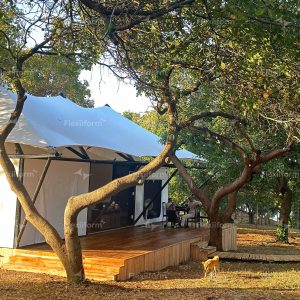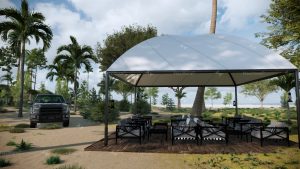
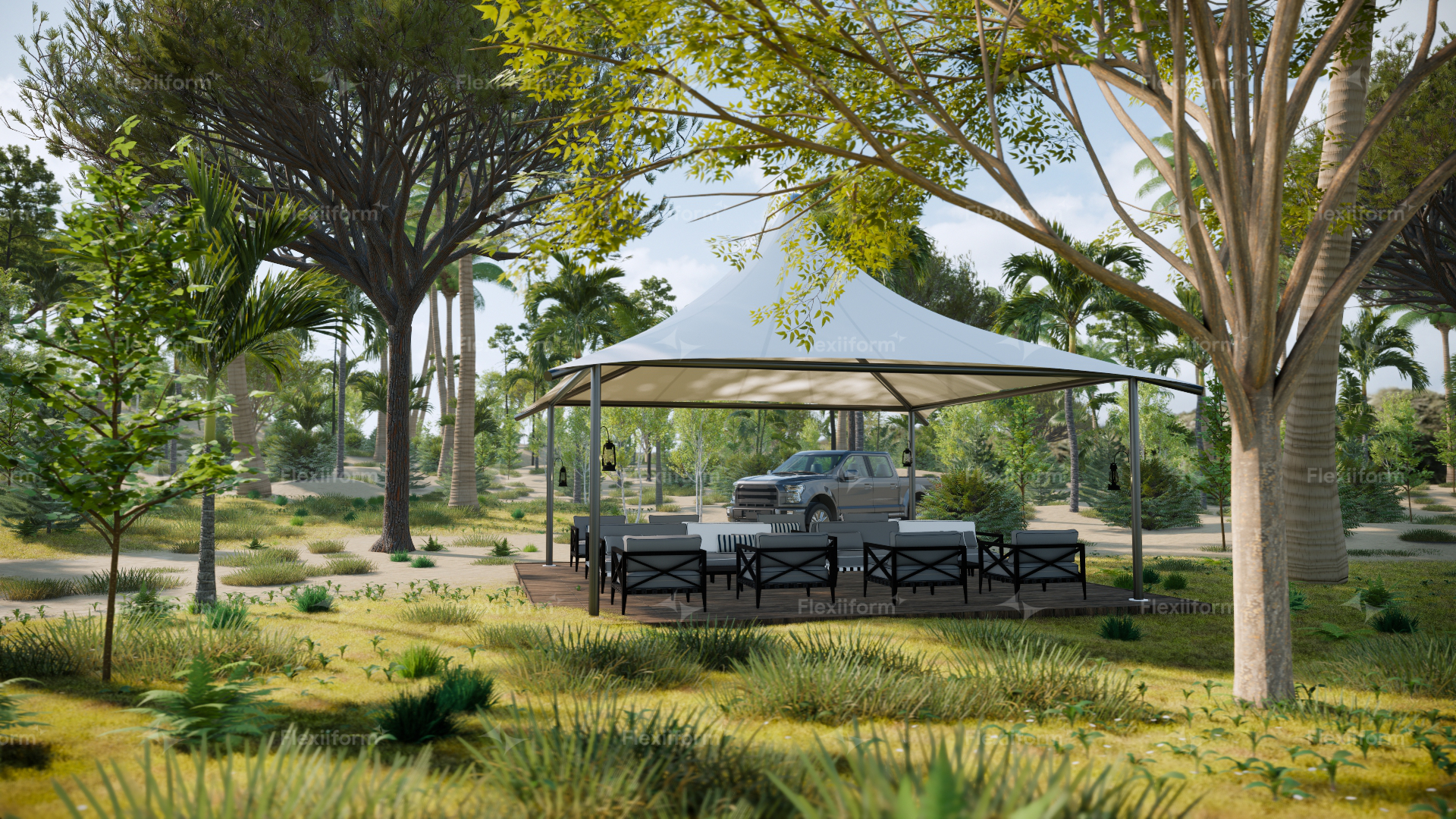
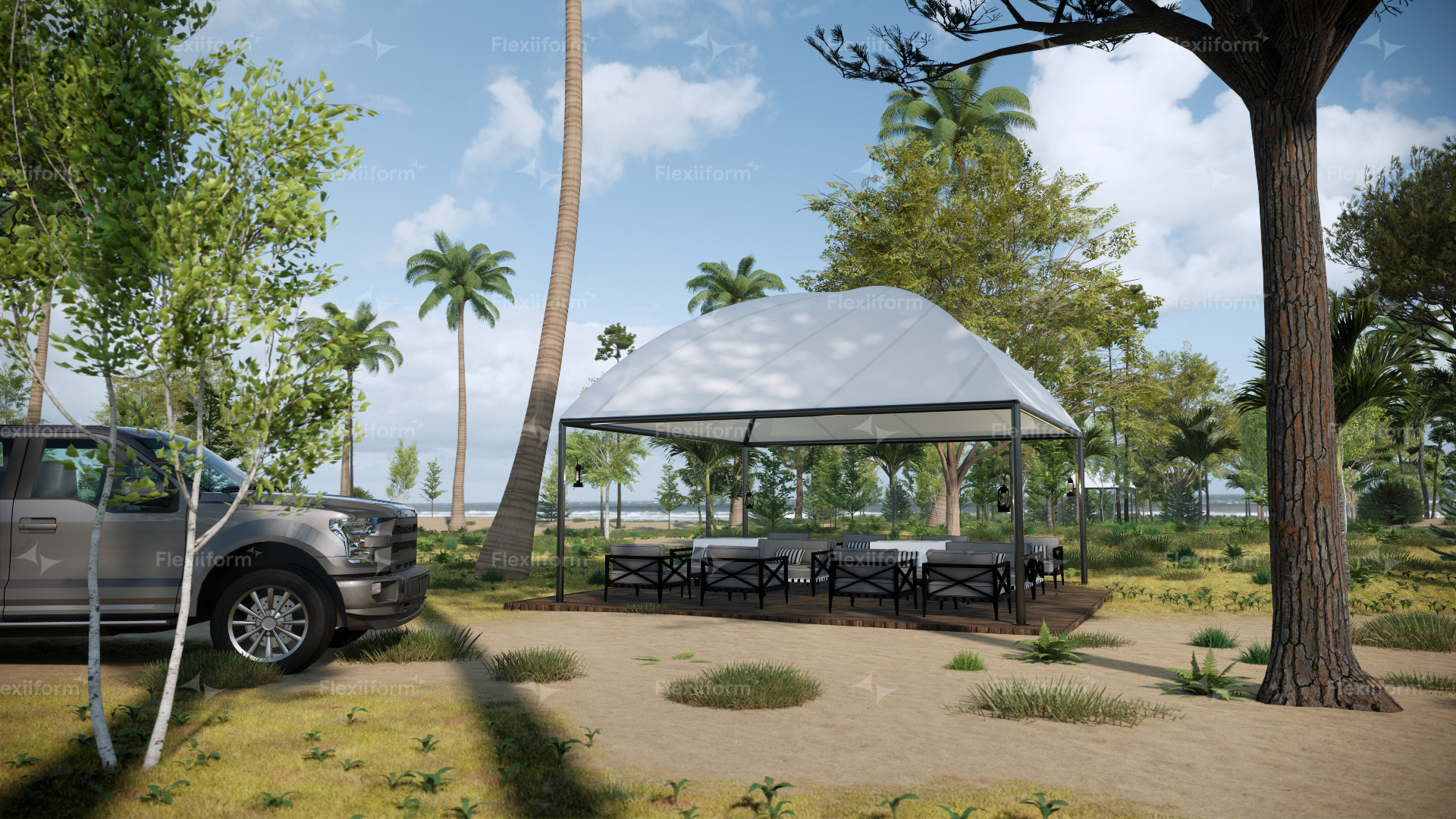
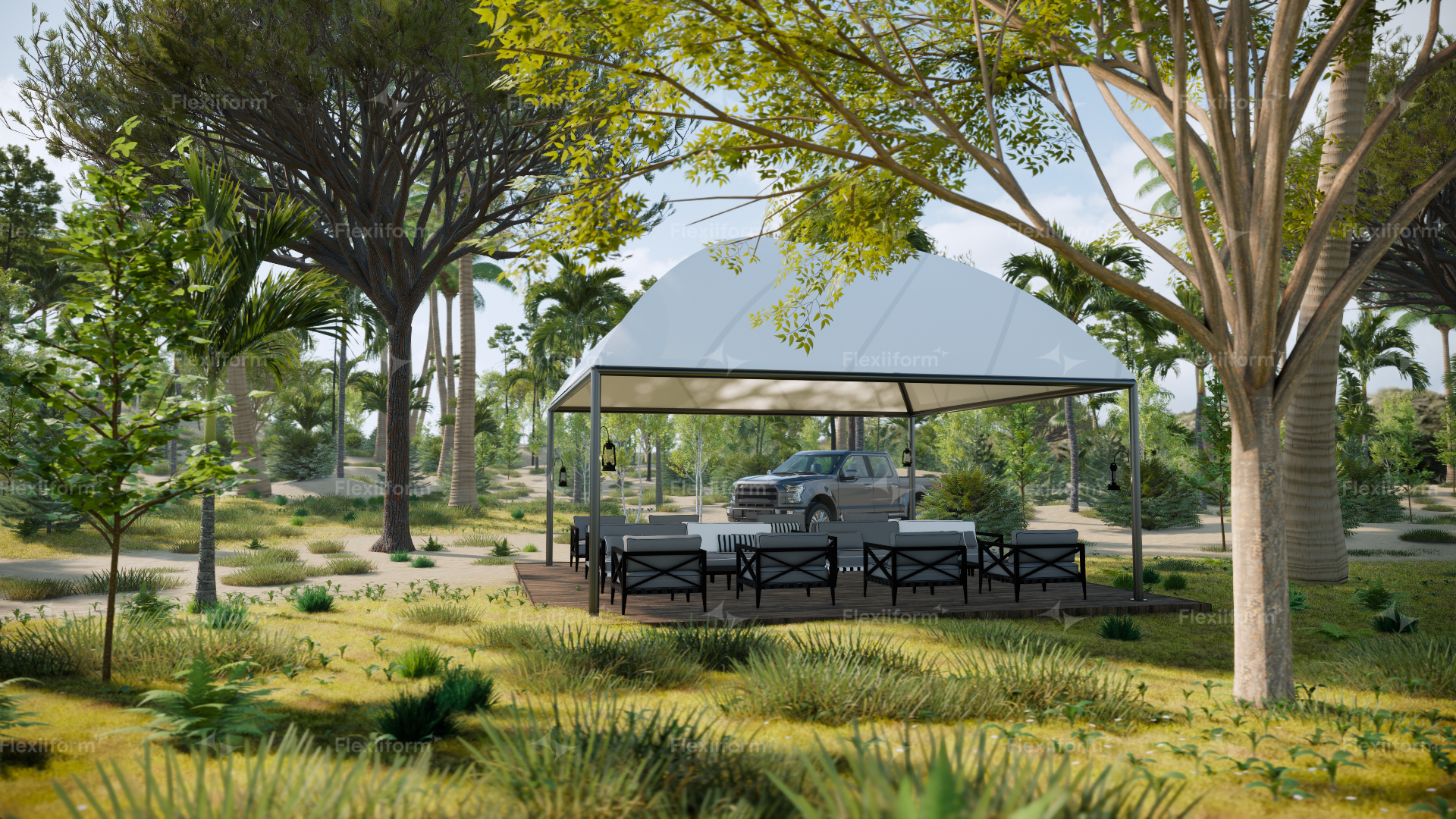
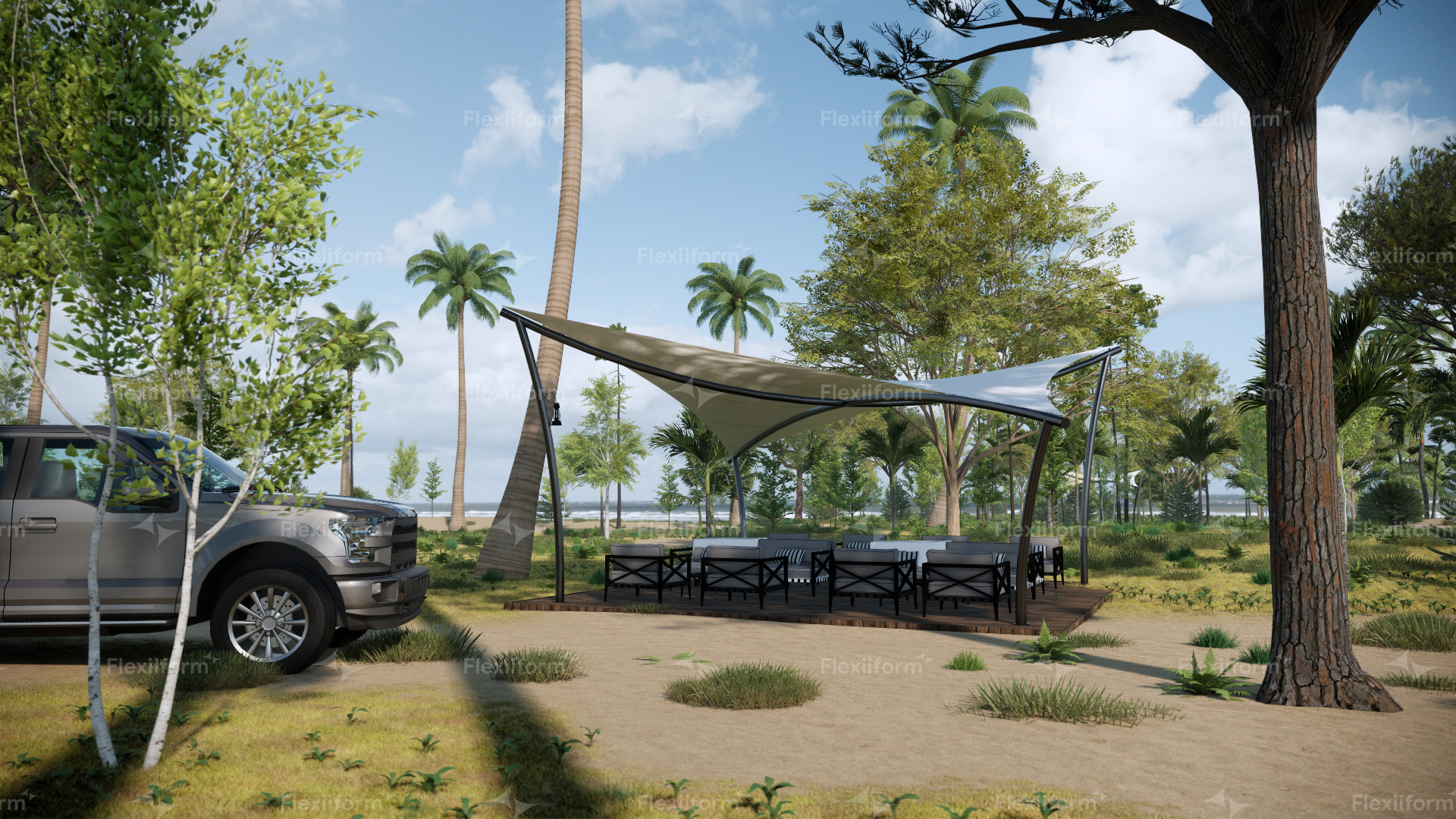
A resort gazebo is a small open-sided shelter with a solid roof, placed in the grounds of a resort, hotel garden, park or campsite so guests can sit, rest, enjoy the view and get out of the sun or rain. In Vietnam it is called a chòi nghỉ. Whether a gazebo works well and lasts comes down to three choices: the roof, the frame material and where you put it.
This guide compares the common gazebo roof types (thatch, clay tile, metal sheet, glass and polycarbonate, tensile membrane), frame materials and shapes, explains the difference between a built-in-place gazebo and a prefabricated one, then suggests which tensile gazebo suits each spot in a resort and what to check before installation.
Resort gazebos at a glance
- What it is a small structure with a solid roof and open sides, for resting, viewing and shelter from sun and rain
- Related terms a larger structure for groups or events is usually called a pavilion; a pergola has an open or covered top on posts and beams
- Common roof types thatch, clay tile, metal sheet, glass or polycarbonate, tensile membrane
- Frame materials timber, bamboo, wood-plastic composite, steel
- Shapes hexagonal, octagonal, round, square four-post
- Two ways to build built in place on site, or prefabricated and assembled
- What Wild Duck supplies prefabricated pergola-style gazebos with tensile membrane roofs, with optional curtain and partition modules; not thatched, tiled or traditional timber gazebos
Where do resorts use gazebos?
- Rest stops in large grounds: along walking paths, in the middle of gardens, or where guests wait for a buggy.
- Viewing points: by a lake, on the beach or on a hillside, wherever the resort has its best view.
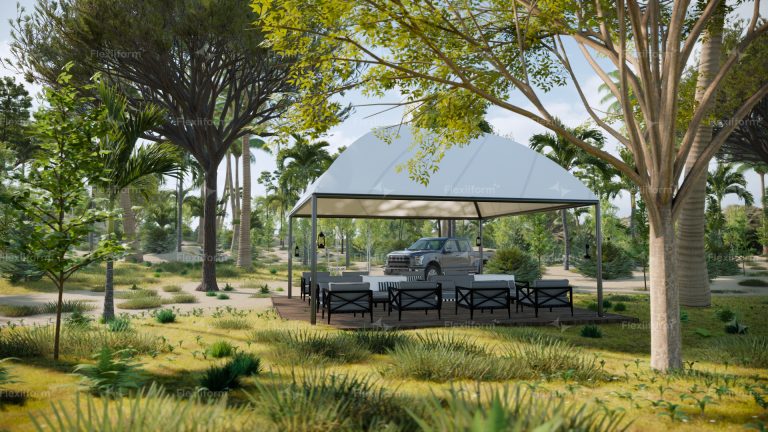
- BBQ, tea and coffee gazebos: outdoor dining for small groups, where a solid roof means tables don’t have to be cleared every time it rains.
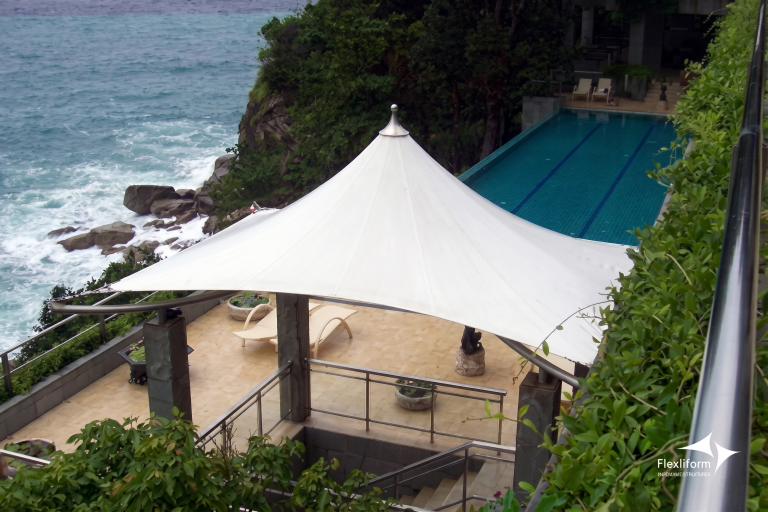
- Poolside gazebos: a family corner or a shaded spot for parents watching children. Our guide to the pool pergola for resorts covers this area in detail.
- Arrival and waiting areas: shade where guests wait for check-in or transport.
- Campsites and shared spaces: a gathering point for evening meals and group activities.
- Parks and playgrounds: public rest shelters for walkers and parents.
Gazebo roof types compared
The roof decides whether a gazebo stays cool, whether it is noisy in the rain and how often it needs repair. The table compares the gazebo roof materials most often seen in tropical resorts:
| Roof type | Keeps rain out | Strengths | Watch out for |
|---|---|---|---|
| Thatch (palm leaf, grass) | Yes | Cool, natural, suits a tropical style | Needs periodic replacement; flammable; can attract insects and nesting birds |
| Clay tile | Yes | Cool, durable, suits traditional and Japanese-style roofs | Heavy, so the frame and footings must be strong; hard to change later |
| Metal sheet | Yes | Cheap and quick to build | Hot under midday sun and loud in rain without insulation; looks utilitarian |
| Glass, polycarbonate | Yes | Lets in plenty of light, keeps the sky in view | Can trap heat without shading; dust and leaves show clearly and need frequent cleaning |
| Open louvres or composite slats | No | Airy, good for climbing plants | Only partial shade, no shelter from rain |
| Tensile membrane | Yes (continuous roof) | Light; curved shapes such as peaks, domes and waves; bright roof that stands out in photos; the roof can be replaced while keeping the frame | Must be tensioned correctly; wipe the membrane regularly to keep it bright; sail designs mainly block sun |
For resorts, the choice usually comes down to two directions: thatched or tiled gazebos for a rustic, traditional look, and tensile membrane gazebos for a modern look where each gazebo becomes an architectural feature. Metal sheet roofs suit service buildings better than places where guests sit for long.
Gazebo frames: timber, bamboo, composite or steel?
- Timber: warm and attractive, pairs with tile and thatch; needs coating, termite protection and regular maintenance outdoors.
- Bamboo: low cost and rustic, suits eco resorts; shorter lifespan and needs careful anti-borer treatment.
- Wood-plastic composite: less maintenance than natural timber, but usually built as an open trellis or louvres, so it needs a separate roof to keep rain out.
- Steel: strong, slim posts keep the gazebo open, easy to prefabricate; needs rust protection, especially near the sea.
Our guide What Is a Pergola? compares frame materials in more detail and explains how a gazebo, a pavilion and a pergola differ.
Hexagonal, octagonal or square gazebo?
Hexagonal and octagonal gazebos are the classic shapes: balanced from every side, they work well standing alone in a garden or by a lake. Round gazebos have a similar effect. A square four-post gazebo is easier to furnish (rectangular tables, long sofas) and easier to line up in a row or join together when the seating area grows.
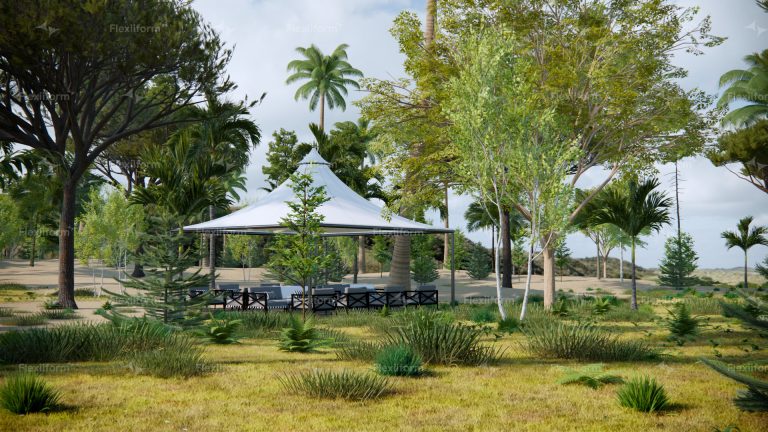
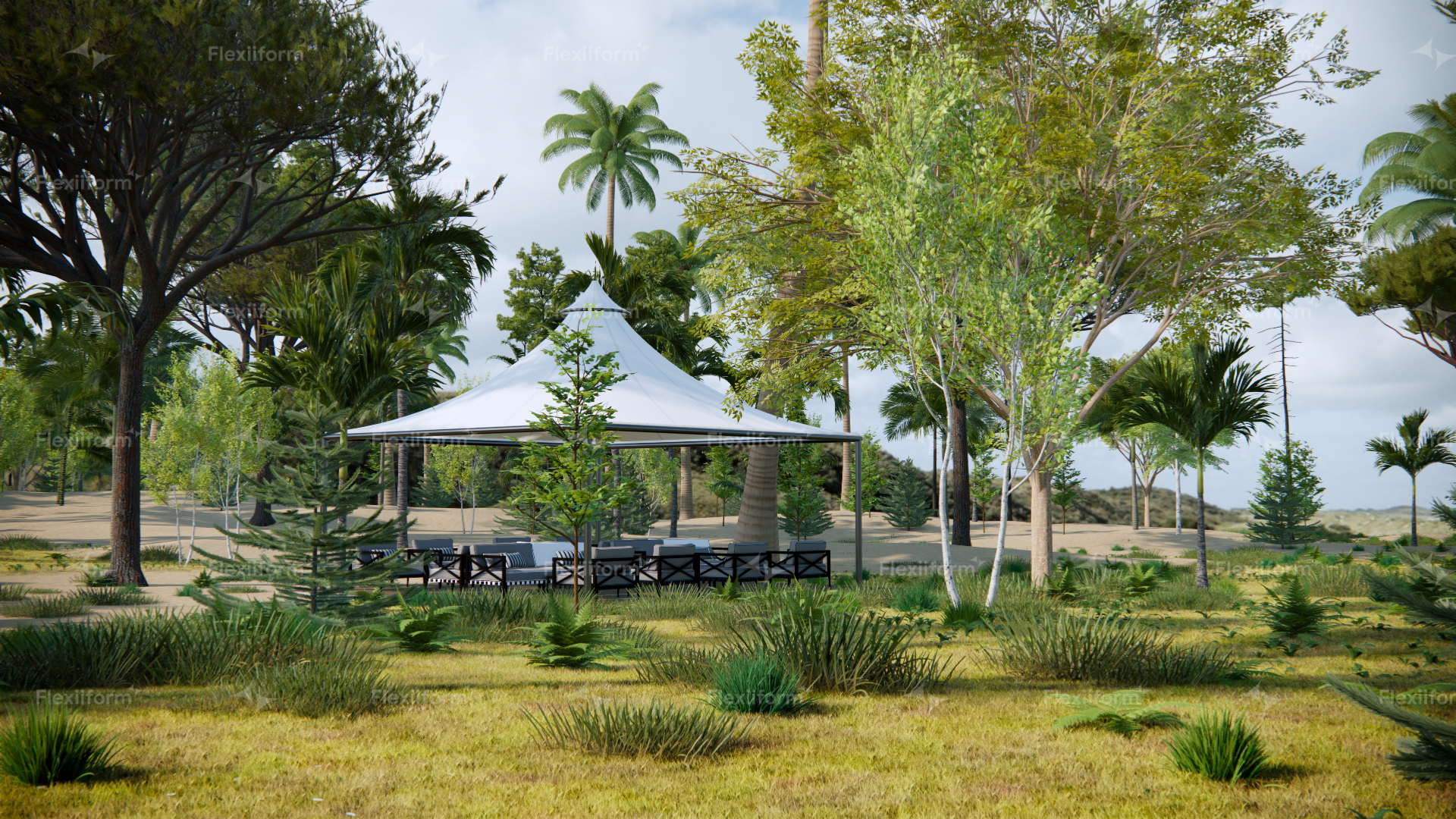
Wild Duck’s tensile gazebos use a four-post frame. Their character comes from the roof: cone, flared peak, dome or wave, so each model looks quite different even on the same frame system.
Built-in-place or prefabricated gazebo?
| Criteria | Built in place | Prefabricated |
|---|---|---|
| How it is made | Footings, posts and roof built on site | Frame and roof made in advance, delivered, assembled and anchored |
| Time on site | Longer, weather-dependent | Shorter, less disruption to areas that are open to guests |
| Changes later | Hard; a new shape usually means rebuilding | The roof can be replaced, curtains or partitions added as needed |
| Best for | Tiled and traditional timber gazebos, structures tied to the main architecture | Resorts that want several matching gazebos, or want to refresh outdoor seating over time |
A prefabricated gazebo is still a permanent, anchored structure, not a pop-up tent. How the posts are anchored depends on the base: timber deck, paving or lawn.
Choosing a tensile gazebo for each spot
Wild Duck Glamping Tent has 7 models in its Pergola Modules range, all built on a prefabricated modular frame. The table suggests a model for each location, based on roof shape and how much each model covers:
| Location | Suggested model | Why |
|---|---|---|
| Rest stops in large grounds, campsites, parks | Cone Roof Pergola | The familiar gazebo silhouette; the tall cone is easy to spot from a distance among trees, and the steep roof sheds rain quickly |
| Lounges, arrival and waiting areas | Flared Peak Pergola | The four corners flare out beyond the posts, so the shade is wider than the frame and covers seats near the edge |
| Centre of a lawn or courtyard, tea or coffee gazebo, small parties | Dome Roof Pergola | Four equal curved faces look balanced from every side, with no “back”; the closed dome covers the whole table area |
| Viewing points by a lake, the sea or on a hillside | Low Dome Pergola | The low roof does not block the view behind it |
| Arrival areas, anywhere that needs an architectural feature | Wave Roof Pergola | A single continuous curved roofline that photographs well from any angle |
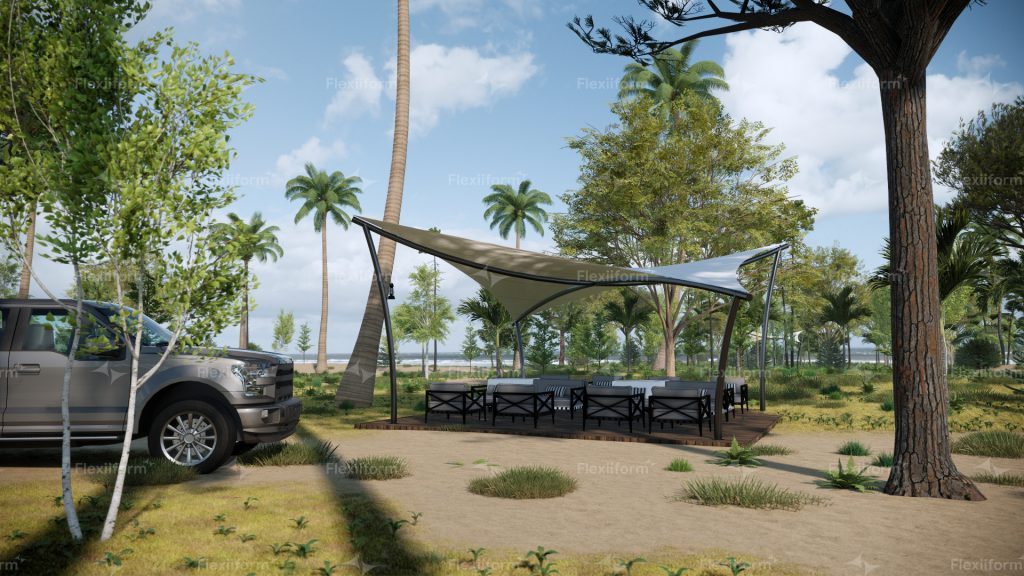
| Eco resorts, seating among trees | Curved Post Sail Pergola | Curved posts and a twisted sail blend into greenery; mainly blocks sun, not rain |
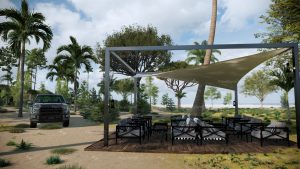
| Daytime seating, beach bars, outdoor cafés | Shade Sail Pergola | The sail gives shade while letting the breeze through; mainly blocks sun, not rain |
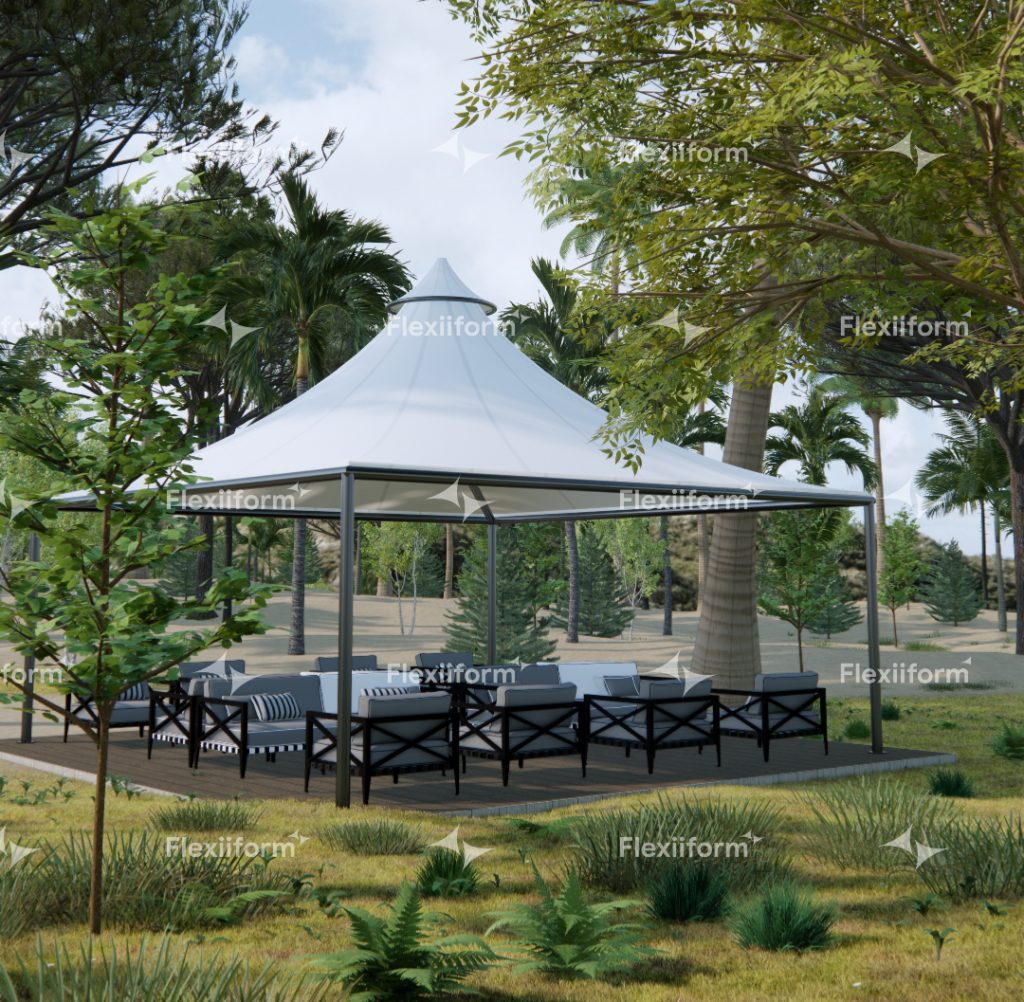
If you need a true gazebo, where guests can stay seated when it rains, choose a continuous roof: cone, flared peak, dome or wave. The two sail models suit spots that need daytime shade and should feel as open as possible.
Turn a gazebo into a private corner with curtains and partitions
Open sides are a gazebo’s strength, but with low afternoon sun, wind-driven rain, or guests who want more privacy, the open edges become its weak point. Wild Duck pergolas accept parts from the Add-on Modules range:
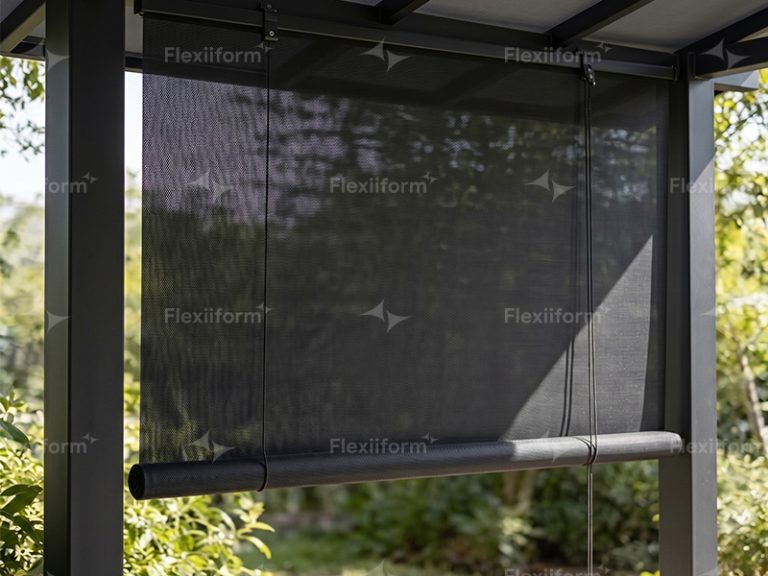
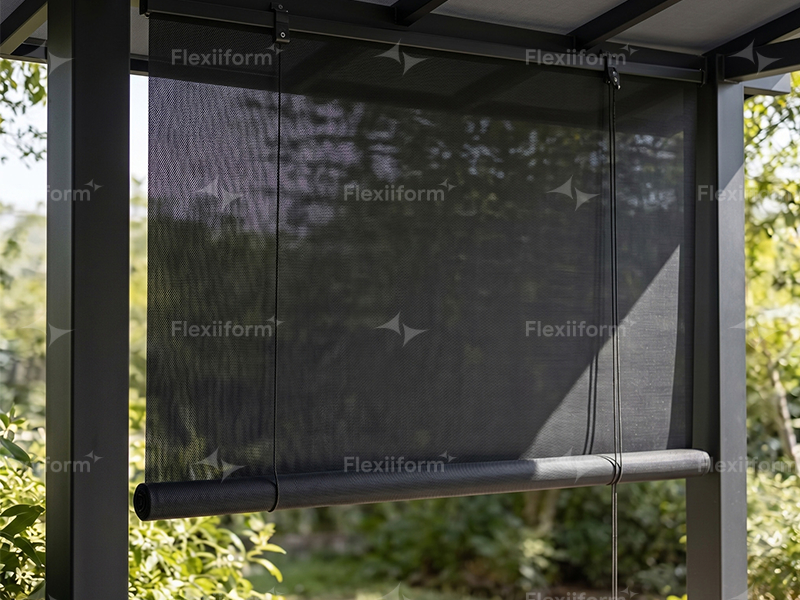
- Curtain Module: lowered on an open side to block low sun, wind and driving rain, and pulled back when you want it open. It can go on the afternoon-sun side only.
- Partition Module: divides the space under the roof into private corners for families, VIP guests or small parties.
- Tensile Roof Module: replaces a worn roof, or switches to a different roof shape on the same frame, to refresh a gazebo area.
Curtains suit the continuous-roof models such as the cone, dome and wave roofs. For the sail models, ask Wild Duck to check the options.
What size should a gazebo be?
There is no standard gazebo size. Whether a gazebo is big enough depends on what you plan to put under the roof. The simplest way to size it is to start from the furniture:
- Count how many people sit at once and choose the furniture: a small tea table, a dining table, a lounge sofa or a BBQ table each need very different space.
- Leave walkways around the furniture so guests and staff can move without squeezing past seated people.
- Allow for roof overhang: morning and afternoon sun reaches seats near the edge, so the roof should be a little larger than the seating area, or add a curtain on the sunny side.
- Choose the height for the purpose: a tall peaked roof feels airy and is visible from afar; a low roof keeps the view open.
Dimensions, height and materials of each Wild Duck model are advised per project based on the site plan and seating, so this guide gives no fixed measurements.
What to check before installing a resort gazebo
- Sun and wind direction: work out which spots need shade at the busiest times (usually midday and afternoon) and the direction of seasonal winds, to orient the gazebo and place curtains on the right side.
- The base: timber decks, paving, concrete and lawn each need a different anchoring method. Check for buried pipes and cables before drilling or digging footings.
- Rainwater from the roof: membrane and steep roofs shed water quickly, so plan where it will run so it doesn’t pour onto paths or where guests stand.
- Distance from large trees: a gazebo under a canopy is cooler, but leaves, sap and dead branches will land on the roof. Leave some clearance and clean the roof regularly.
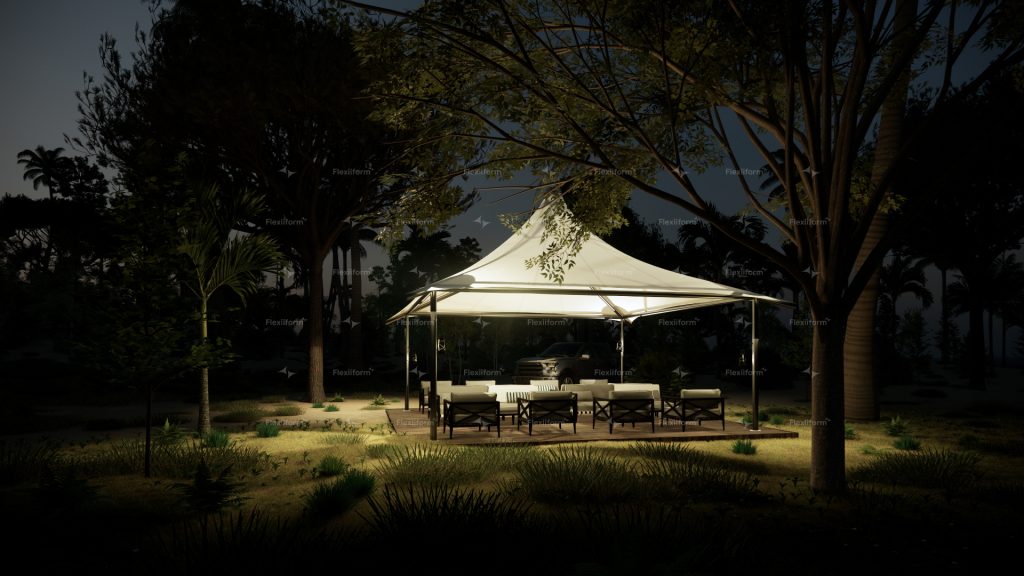
- Power and evening lighting: if guests will use the gazebo after dark, plan outdoor-rated wiring and lights from the start.
- Wind and storms: beachfront and hillside resorts often see stronger wind than sheltered gardens. Ask clearly about wind resistance and how curtains are handled in a storm.
- A path to the gazebo: a beautiful gazebo that can only be reached across wet grass gets little use. Plan a paved path or walkway.
How much does a resort gazebo cost?
Gazebo prices vary widely between bamboo and thatch, timber and tile, steel and metal sheet, and tensile membrane. For a Wild Duck tensile gazebo, the price depends on:
- The number of gazebos in the project
- The size, height and roof shape of each model
- Membrane material, membrane colour and frame colour
- How the posts are anchored to the base
- Add-on modules such as curtains and partitions
- Project location, transport and installation conditions
For a quote, send a site plan (or photos with the plot dimensions), the number of gazebos, seats per gazebo and the roof shape you like through the Contact page, or use the quote button on any product page. Wild Duck replies within 24 working hours.
If your resort needs somewhere for guests to sleep, not just rest, take a look at Wild Duck’s glamping tents.
Frequently asked questions about resort gazebos
What is the difference between a gazebo and a pergola?
A gazebo always has a solid roof for shelter from sun and rain. A pergola is a post-and-beam frame whose top can be open like a trellis or covered. A pergola with a closed peaked roof, such as the Cone Roof Pergola, works as a gazebo. See What Is a Pergola? for more.
Does a tensile gazebo keep out rain?
The continuous-membrane models, with cone, flared peak, dome and wave roofs, shelter the seating area from both sun and rain. The two sail models mainly provide shade and are not rainproof. To block driving rain on an open side, add the Curtain Module.
Hexagonal or square gazebo?
Hexagonal and octagonal gazebos suit standalone spots where they are seen from every side. Square four-post gazebos are easier to furnish and to line up in a row. Wild Duck’s tensile gazebos currently use a four-post frame; if your project needs another shape, send a request for advice.
Does Wild Duck build thatched or tiled gazebos?
No. Wild Duck supplies prefabricated pergola-style gazebos with tensile membrane roofs, plus curtain, partition and replacement roof modules. Thatched, tiled and traditional timber gazebos are usually built by specialist timber and bamboo contractors.
Is a prefabricated gazebo sturdy?
A prefabricated gazebo is anchored permanently to its base; it is not a pop-up tent. How sturdy it is depends on the anchoring method for that base and the wind conditions at the site. Wild Duck advises on placement and anchoring from the actual site plan; for beachfront locations, mention this in your request.
How much does a tensile gazebo cost?
The price depends on the number of gazebos, size, roof shape, membrane material and add-on modules. Send your site plan and seating needs through the Contact page and Wild Duck will quote within 24 working hours.
Planning gazebos for your resort or garden?
Send a site plan, the number of gazebos, seats per gazebo and the roof shape you like. Wild Duck will suggest models and a layout, and quote within 24 working hours.
Get gazebo advice